
When you first begin to introduce a bottle to a newborn, especially if you are choosing to alternate between nursing and bottle feeding it is important to begin bottle feeding your baby in a way that mimics the flow and rhythm of nursing. Just like there is a learning curve for nursing, creating a satisfying feeding experience with a bottle can be learned as well.
One way I always recommend when beginning to bottle feed is called Paced bottle feeding. This is a technique that aims to replicate the pace and flow of breastfeeding. It recognizes the natural cues and needs of a baby during feeding, promoting a sense of control and satiety. By slowing down the feeding process, paced bottle feeding helps prevent overfeeding, reduces the likelihood of gas, colic, and spit-up, and allows the baby to develop self-regulation skills.
SO! Here is the ‘how to’:
First, choose a bottle nipple with a slow flow that closely resembles the flow of breast milk. Oftentimes this would be a preemie nipple. When you hold the bottle upside down, the milk should not drip out of the nipple. If it is dripping, you know the flow level is too high. The goal is that your baby will be putting in the work themselves to suckle and have the milk flow from the bottle nipple to their mouth, vs it just pouring in which can cause choking and trapped air causing gas. This slow flow helps ensure the baby isn’t overwhelmed allowing them to control the pace of feeding.
I like to recommend that you choose a nipple that looks the most like your own if you are feeding the baby at the breast. The Lansinoh nipple, and the Nuk natural flow nipples I often find to be the best. They allow for a wider base that will encourage a baby to take a larger mouthful just as they do at the breast.
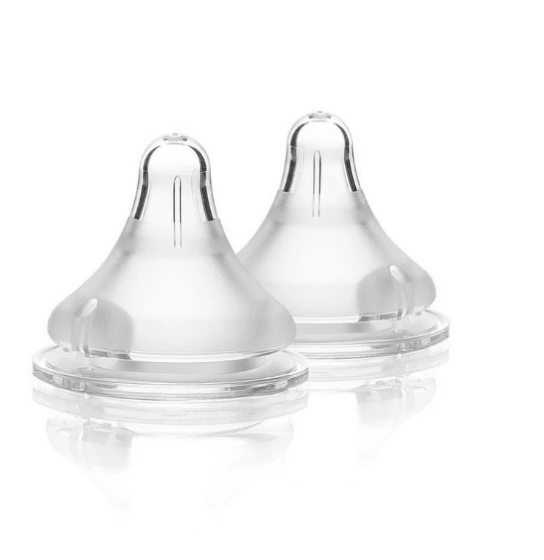
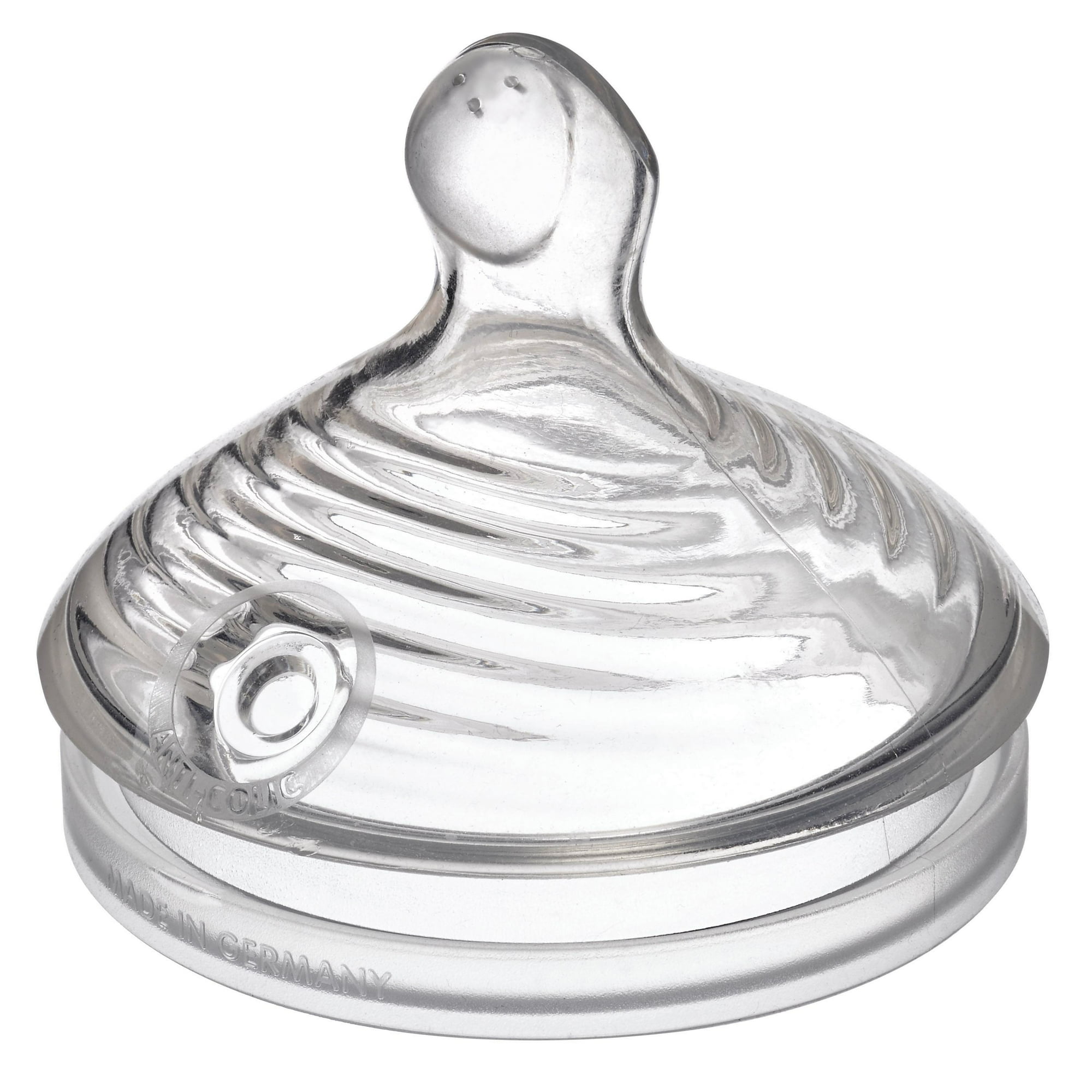
Second, hold the baby in an upright position, not laying flat on their back. This can feel awkward at first because playing with dolls and seeing babies fed in the media you often see them laying down to have a bottle. Support your baby’s head and hold them in a slightly inclined position during feedings.
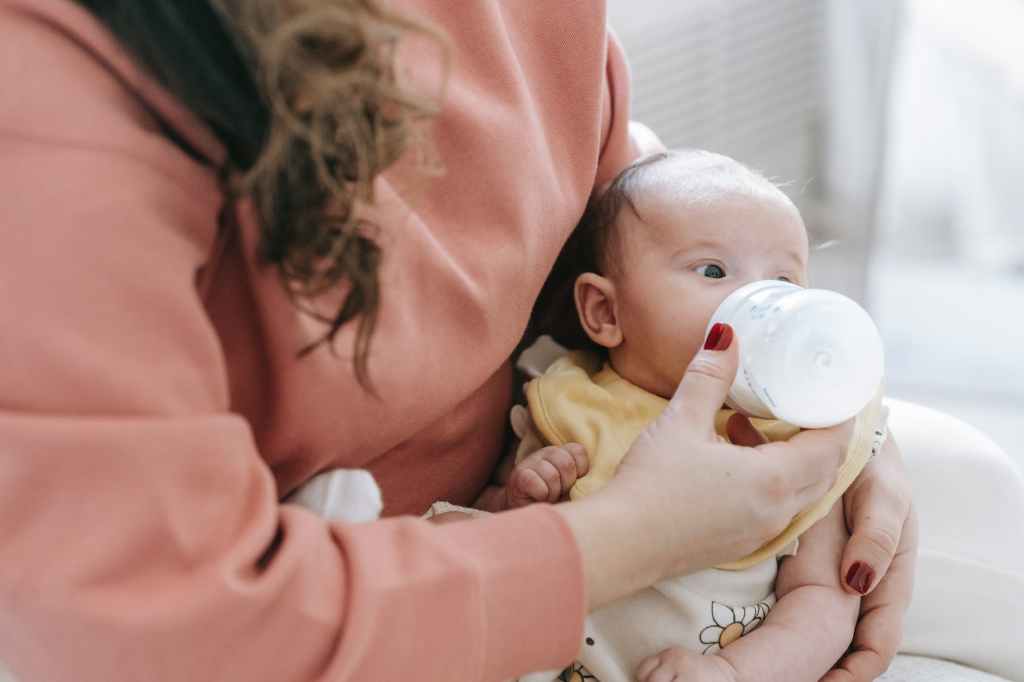
Third, you are already keeping your baby more upright now it is time for bottle positioning. The bottle itself should be level horizontal with milk just filling the nipple.

Fourth, follow the baby’s cues: Pay attention to your baby’s hunger and fullness cues. Allow them to take breaks during feeding, encouraging them to pause, rest, and burp if needed. This helps them develop self-regulation and recognize their own satiety. Maintain eye contact and interact by engaging with your baby during feeding by maintaining eye contact, talking, and singing softly. This interaction promotes a nurturing environment, reinforcing the emotional bond between you and your little one, and can also help break the cycle of falling asleep during feedings.
Fifth, make sure you burp the baby: Gently burp your baby at regular intervals during the feeding to release any trapped air. This can help prevent discomfort and reduce the likelihood of spitting up. For especially young babies I find that burping every 1 to 2 oz is helpful for pacing. Some babies don’t need burping often when they are nursing, but will need more frequent burps when using a bottle.
Thats all! This method really helps your baby stay comfortable, happy, and retain the ability to transfer back and forth between bottle and breast. Please reach out with any questions and I would be happy to help you!
Ashley – Mingo’s Nest Doula
 Mingo's Nest Doula